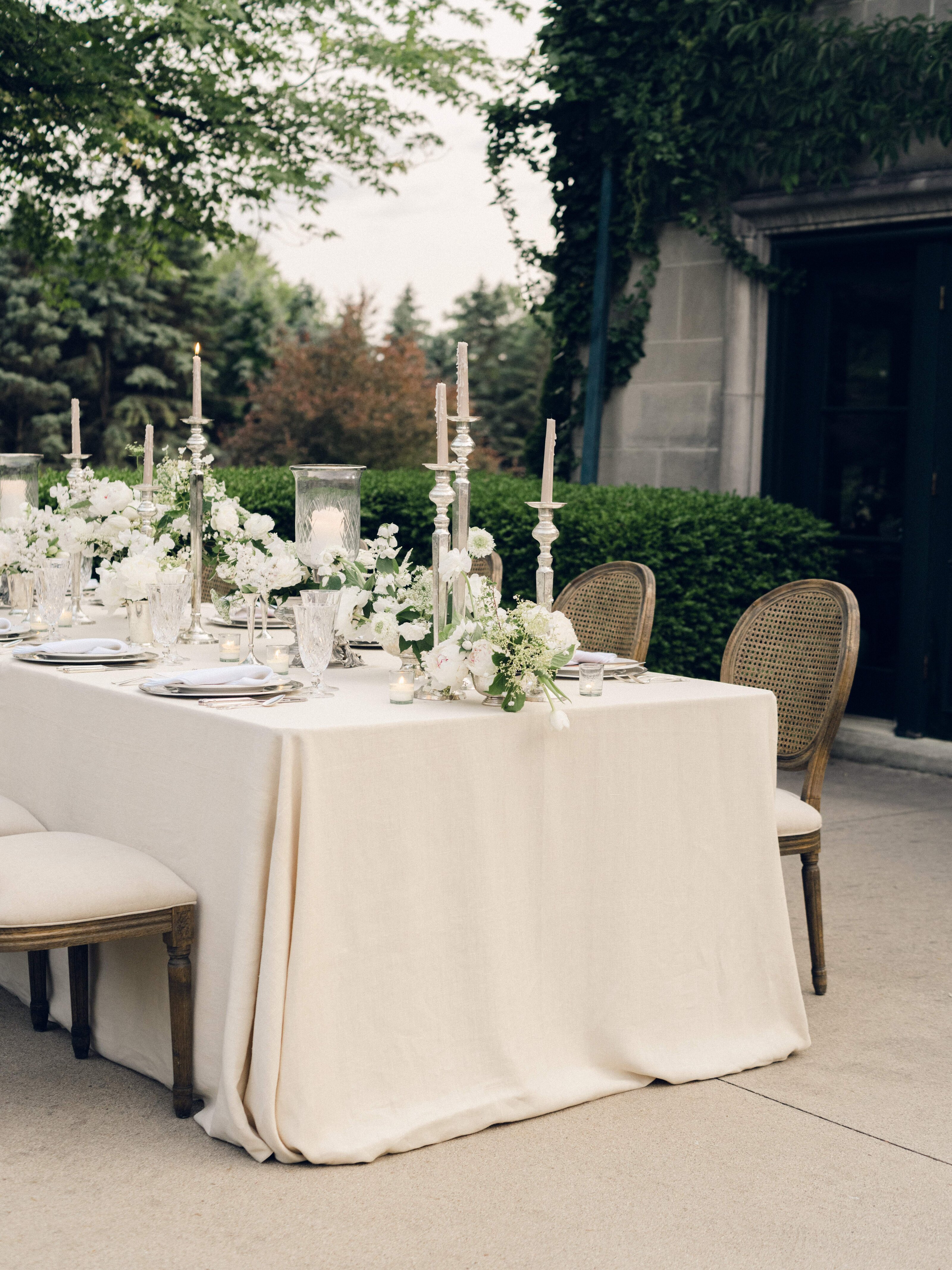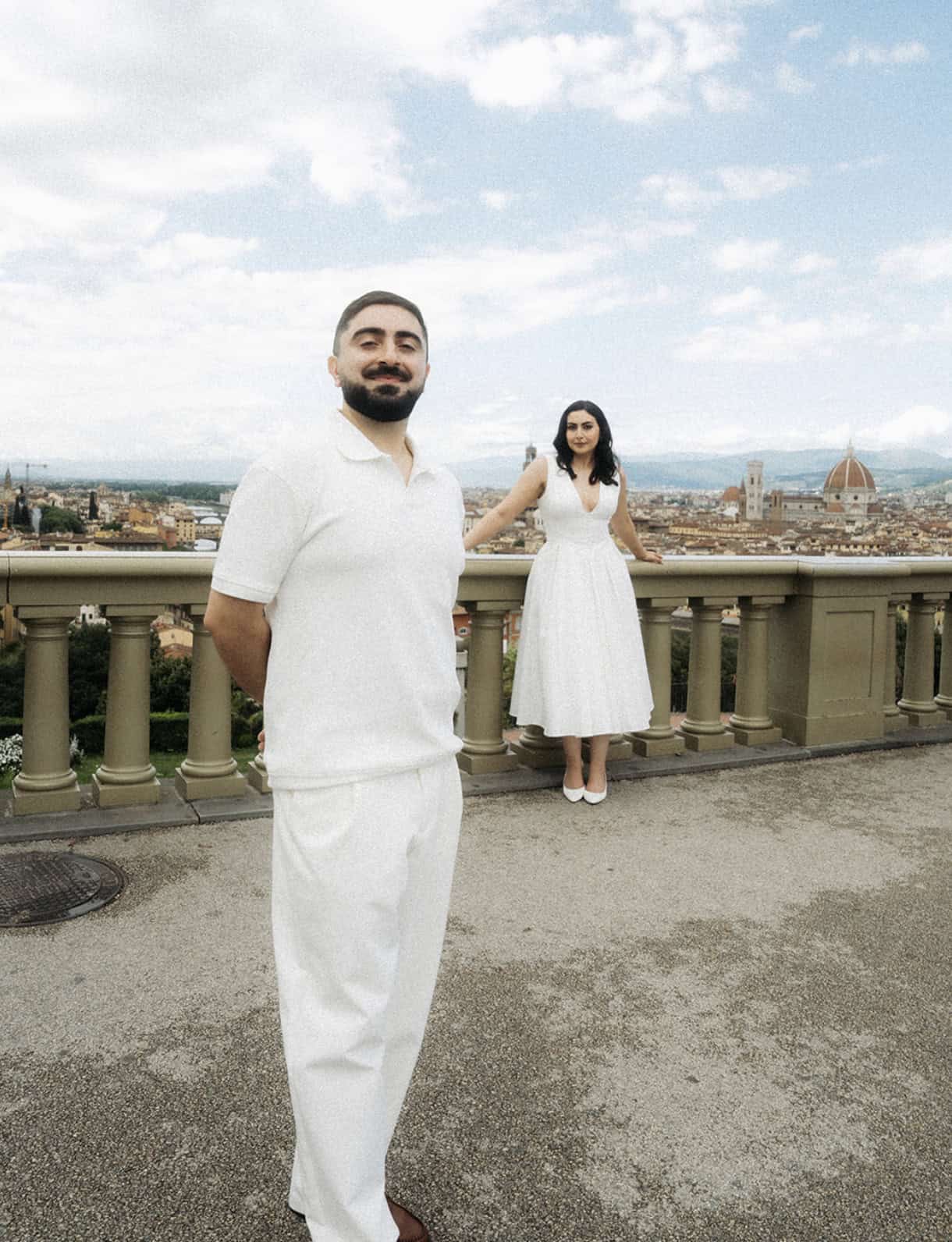
Something is shifting. Over 15,000 foreign couples married in Italy last year — a 64% increase from 2019 — with American couples making up nearly one-third of that total. And this isn’t just about beautiful backdrops.
More than half of Americans now choose experience-driven celebrations over traditional hometown receptions. Not a venue. Not a ballroom. A moment — one that lives with your guests long after the flight home.
Italy delivers that. Completely. Unapologetically.
From finding the best wedding locations in Italy to understanding what an Italian wedding actually costs, to knowing exactly how to get married in Italy as an American — it’s a different kind of planning. A different kind of commitment. And a wildly different kind of result.
This is the guide that walks you through all of it.
The Growing Trend: Why US Couples Are Ditching Hometown Weddings for Italy
The Numbers Don’t Lie
Italy is now the top international wedding destination for American couples after Mexico — and the industry noticed. Marcy Blum, one of Manhattan’s most prominent luxury event planners, now builds almost 90% of her international weddings around Italy. Jack Ezon of luxury travel service Embark Beyond watched his company’s international events climb from 60% pre-pandemic to nearly 90% today, split evenly between Italy and France.
Over 13,600 foreign couples married in Italy in 2023 alone — a 22.3% increase from the year before. And these aren’t intimate elopements anymore. The average Italian destination wedding now hosts 60.7 guests, up from 55.6. Couples bringing 51 to 100 guests jumped from 41.3% to 63% of all Italian destination weddings. The word is out. And people are booking.
Your Wedding Becomes a Whole Experience
A destination wedding in Italy isn’t a reception. It’s a world your guests step into for 2-3 days — a welcome dinner, the wedding itself, a farewell brunch, and everything in between. Wine tastings. Fiat 500 tours through cobblestoned streets. City walks at golden hour. Landmark visits on the days between events.
Your guests don’t just witness your vows. They live something with you.
More than half of Americans surveyed in 2024 said they’d rather spend their money on memory-making experiences than things — and over a third plan entire trips around a single meaningful event. Your wedding in Italy becomes exactly that kind of experience. For everyone.
Nobody Cancels
Blum put it simply: “The reason Italy is so popular is because that’s where your guests want to go. You send an invitation that you’re getting married in Capri or Positano and everybody comes. Everybody. They want to come. Nobody cancels”.
One couple planning their Italian celebration reported an 80-85% RSVP rate — two months before their deadline. That’s not typical. That’s Italy.
It Feels Different — and That’s the Point
Your Italian wedding won’t feel like your American one. It shouldn’t. Trying to recreate a US reception on Italian soil misses the whole point — the Italians won’t understand it, it won’t feel authentic, and your guests will sense the disconnect. One couple described their celebration as more “boutique” — a more intimate, considered experience compared to the large-scale US wedding format built around volume rather than detail.
For Italian-American couples especially, marrying where the family story began carries an emotional weight that no hometown venue could replicate. It’s not just a backdrop. It’s a homecoming.
Understanding Italian Wedding Costs and What You Actually Get
What the numbers actually look like
A three-day Italian wedding celebration costs around €50,000 on average. That’s the middle of a very wide spectrum — and knowing where you sit within it changes everything about how you plan.
Intimate elopements and symbolic ceremonies for 2-10 people run €8,000-€20,000. Small destination weddings for 15-30 guests land at €18,000-€35,000. Medium weddings for 40-60 guests range €30,000-€55,000. And once you’re hosting 80-100 guests, you’re starting at €45,000 and climbing well beyond €90,000. Some couples keep it beautifully minimal at €20,000. Others go all in at €250,000+.
Neither is wrong. Both are Italy.
Venue hire and catering expenses
Your two biggest line items are venue and catering — and both vary more than you’d expect.
Venue rental depends entirely on property type and region. A restaurant buyout or smaller venue runs €1,500-€5,000. Countryside estates land at €4,000-€12,000. Premium villas range €10,000-€30,000+, and ultra-luxury estates go beyond €30,000. A villa with spectacular views and accommodation for 20-30 guests across three nights? Expect €8,000-€60,000 depending on what you’re after.
Catering is your second largest investment — and in Italy, it’s one worth making. Lower mid-range sits at €110-€150 per guest. Strong destination wedding catering runs €150-€220. Premium reaches €220-€300+, and a true five-star experience exceeds €300 per guest. For 60 people, a five-course meal with unlimited drinks, bar, and wedding cake typically lands at €9,000-€12,000.
This is Italian food. It earns every euro.
Regional price differences across Italy
Where you marry shapes what you spend. Lake Como commands €70,000-€150,000+ — Alpine glamour with a price tag to match. The Amalfi Coast ranges €45,000-€100,000+. Tuscany sits at €35,000-€80,000+, and Puglia offers some of the most striking scenery in the country at better value — €28,000-€70,000+.
Same country. Very different budgets. The region you choose isn’t just an aesthetic decision — it’s a financial one.
Hidden costs worth knowing upfront
A few figures that catch couples off guard. VAT applies at the standard 22% rate, though certain services like accommodation and restaurants qualify for a reduced 10%. The SIAE music tax — required any time copyrighted music plays — runs €300-€470 depending on guest count and venue category. Factor in vendor meals, supplier deposits of 30-50%, and travel costs when vendors journey from other regions.
None of these are dealbreakers. They’re just details worth knowing before the contract lands.
What makes it worth every cent
Italy gives you something no ballroom can replicate — iconic landscapes, centuries of architecture, food and wine culture woven into the day itself, and a supplier ecosystem that has been doing this at the highest level for decades. The investment isn’t just in the wedding. It’s in the experience your guests carry home with them.
And that part? It’s genuinely priceless.
How to Plan Your Wedding in Italy: The Complete Process
Choosing Your Italian Region and Venue
Every decision that follows starts here. The region you choose sets the tone for everything — the light, the landscape, the mood of the whole celebration.
Lake Como brings calm Alpine water and terraced gardens. Refined. Atmospheric. The kind of setting that feels like it was designed for one perfect day. Tuscany gives you rolling hills and cypress-lined estates that feel utterly removed from the world — unhurried, golden, and cinematic in every direction. The Amalfi Coast is something else entirely — cliffside energy, open air, salt and sun and colour.
Choose the feeling first. The venue follows.
One thing to know: peak season dates between May and September book 12-18 months out. If you have a location in mind, move early.
Working with a Destination Wedding Planner
Here’s the honest truth — coordinating an Italian wedding from the US without local support is where things unravel. Language barriers, regional regulations, vendor relationships, cultural nuances — these aren’t things you navigate from a different continent through Google.
A specialized Italian wedding planner doesn’t just manage logistics. They open doors. Prestigious venues, trusted supplier networks, years of industry relationships that no amount of online research replicates. Full-service planning typically runs €6,000-€20,000 depending on the size and complexity of your celebration.
That’s where the right planner pays for itself.
Legal vs. Symbolic: Knowing the Difference
Getting legally married in Italy means obtaining a Nulla Osta — a certificate from your home country proving you’re free to marry — then having it translated, apostilled, and submitted to Italian authorities. The process takes weeks. Sometimes months. Civil ceremonies can only take place in locations with Casa Comunale status, where town registrars bring the official registers.
Many couples choose a different route entirely: marry legally at home, then celebrate symbolically in Italy. Same vows. Same setting. Dramatically less paperwork. It’s a decision worth making early — and with your planner’s guidance.
Coordinating Vendors Across Time Zones
You’ll be planning while Italy sleeps, and vice versa. Regular video calls with your planner keep everything aligned. Rotate meeting times so the inconvenience is shared fairly across continents. And document everything in writing — async clarity is far more valuable than a rushed real-time conversation.
Your planner handles the day-to-day. Your job is to stay informed, not overwhelmed.
Designing a Multi-Day Guest Itinerary
Think beyond the wedding day itself. Most Italian celebrations unfold across a welcome dinner, the wedding day, and a farewell brunch — three distinct moments, each with its own atmosphere.
Between events, organized excursions bring the Italy your guests dreamed about to life. Vineyard tours. Private boat rides. Guided city walks. Cooking classes. The welcome dinner gathers everyone before the main event — relaxed, unhurried, the perfect way to arrive together. The farewell brunch is quieter. Intimate. A soft close to something that felt extraordinary.
Navigating Italian Hospitality and Service
Italian business culture moves differently. Contract terms, regional customs, supplier expectations — these shape vendor relationships in ways that catch international couples off guard.
A professional planner bridges that gap. They prevent the complications that come from incomplete information, unofficial sources, or simply not knowing what questions to ask. The experience of your day — not just the logistics — depends on getting this right.
Making the Distance Work: Practical Tips for Planning from the US
The distance is real. But it doesn’t have to be the hard part.
Couples do this every year — coordinating an Italian wedding from a different continent, across time zones, through WhatsApp threads and late-night video calls. And when it’s done right? You won’t feel the gap. Neither will your guests.
Here’s how to make it work.
Managing Guest Travel and Flight Logistics
Start earlier than feels necessary. Save-the-dates go out 12 to 18 months before your date — giving guests time to book flights before prices climb and Italian hotels fill up for peak season. Formal invitations follow 6 to 8 months out, and they need to carry everything: venue address, accommodation options, the full event schedule, transfer preferences, the works.
Expect around 30% of invitees to decline. That’s normal. The ones who come? They’re all in.
For airport transfers, work with your planner to collect arrival details during the RSVP process — then arrange Mercedes V-Class vans or minibusses to meet guests directly at arrivals and deliver them to their hotels. No scrambling. No stress. Just a seamless welcome to Italy.
Two-Center Weddings: The Smarter Way to Arrive
Here’s a structure that works beautifully. Host your welcome event in the major city where guests land. Then travel together to your countryside venue the following day.
Your guests land, settle, exhale. Nobody’s rushing from a long-haul flight straight into a formal dinner. Everyone arrives at your venue rested, ready, and genuinely excited for what comes next.
Let Italy Be Italy
This is perhaps the most important thing on this list. Don’t recreate your American reception in Italy. It won’t translate. The Italians won’t understand it, your guests will sense the disconnect, and you’ll spend a lot of energy working against the very thing that made you choose Italy in the first place.
Trust the culture. Swap elaborate meat stations for authentic Tuscan antipasti. Let Italian culinary expertise do what it does best. Your guests flew across an ocean — they want Italy, not a familiar reception in an unfamiliar place.
Timing: When to Go and What to Avoid
Peak heat in July and August makes outdoor celebrations genuinely uncomfortable — and Italian venues rarely have the air conditioning you’d expect back home. June and September are the sweet spots: beautiful weather, manageable temperatures, golden light.
May carries some rain risk. October marks the start of the wet season. If you have flexibility, September is hard to beat.
Make It a Full Celebration
Your guests are already making the journey — so make the most of it. Host bachelor and bachelorette events a few days before the wedding. No separate trips. No additional flights. Just more time together in one of the most beautiful countries in the world.
That’s the version of this experience your guests will talk about for years.
Your Italian Wedding Story Starts Here
A wedding in Italy isn’t the easy choice. The time zones are real. The paperwork is real. The distance between your sofa and your dream venue is very, very real.
But here’s what’s also real — when you stop trying to recreate an American reception on Italian soil and start trusting the culture, the planners who know it, and the experience it offers, something shifts. Your celebration stops being a logistics project and starts feeling like the story it was always meant to be.
Work with specialists who understand the regulations. Lean into Italian hospitality rather than fighting it. And coordinate across time zones without apology — because the couples who do the work, who trust the process, who embrace what Italy actually is rather than what they imagined it might be, those are the couples whose guests show up. All of them. And remember it for the rest of their lives.
The distance makes it worth it.
It always does.
+ view the comments